Making space for closures
By John Hardy

Closures look simple in Scheme. A procedure can carry bindings from its surrounding environment and use them after the call that created them has returned. On a Z80 that simple idea needs a concrete runtime representation and a garbage collector that can keep the captured storage alive. In Building a heap out of slabs I described the heap where Skate stores pairs, bindings and closures. This article follows one closure from its first call to the point where its captured storage can be reclaimed.
Procedures (i.e. functions) are central to Scheme. They take arguments, perform calculations and return a value. They are also values themselves, so we can store them in variables, pass them as arguments and return them from other procedures.
An ordinary call
A small procedure gives us a starting point:
(define (square n)
  (* n n))

(square 5) ; 25
(square 4) ; 16
In the first call the parameter n is bound to the argument 5. The body multiplies that value by itself and returns 25. The second call has its own binding for n with the value 4.
At the machine level the stack holds information about active calls, including where to resume the caller. Returning from a call releases its stack space for reuse.
Skate separates that temporary call information from the storage for bindings. An ordinary call creates a map on the stack containing pointers to binding records on the heap. Each binding record occupies three bytes and contains a value with its type and state flags.
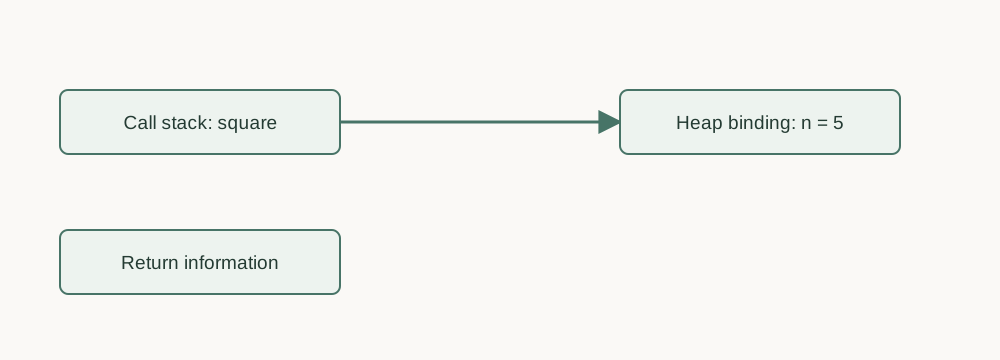
The call's stack map refers to a separate heap binding. This illustration is public domain.
When square returns, its map is removed from the stack. In this example nothing else refers to the binding for n, so the record becomes eligible for garbage collection. Its storage is reclaimed during collection rather than at the instant the procedure returns.
Lexical scope
Scope determines which binding a name refers to. In Scheme this follows the nesting of the source code itself. A name refers to the binding in the nearest enclosing scope that defines it. An inner procedure can also refer to bindings established by the surrounding code.
(define (make-adder n)
  (lambda (x)
    (+ n x)))

(define add-two (make-adder 2))
(add-two 40) ; 42
In this example lambda creates a procedure with one parameter, x. Its body uses both x and the surrounding parameter n. Calling make-adder with 2 creates that inner procedure and returns it to the caller. We bind the returned value to add-two and later call it with 40.
By then the call to make-adder has finished but add-two still uses its binding for n. Lexical scope establishes which binding to use. The implementation must keep its storage available after the original call returns.
Creating the closure
A closure is a special kind of procedure that combines its code with bindings from the surrounding environment in which it was created. Those bindings remain available whenever the closure is called, even after the enclosing procedure has returned. Evaluating the inner lambda creates this closure.
During the call to make-adder, Skate allocates a closure object on the heap. The object contains a pointer to the procedure descriptor followed by an array of pointers to the binding records. The descriptor identifies the compiled procedure and which bindings it captures.
The closure points to the existing binding record for n. Both the active call and the new closure refer to that same record.
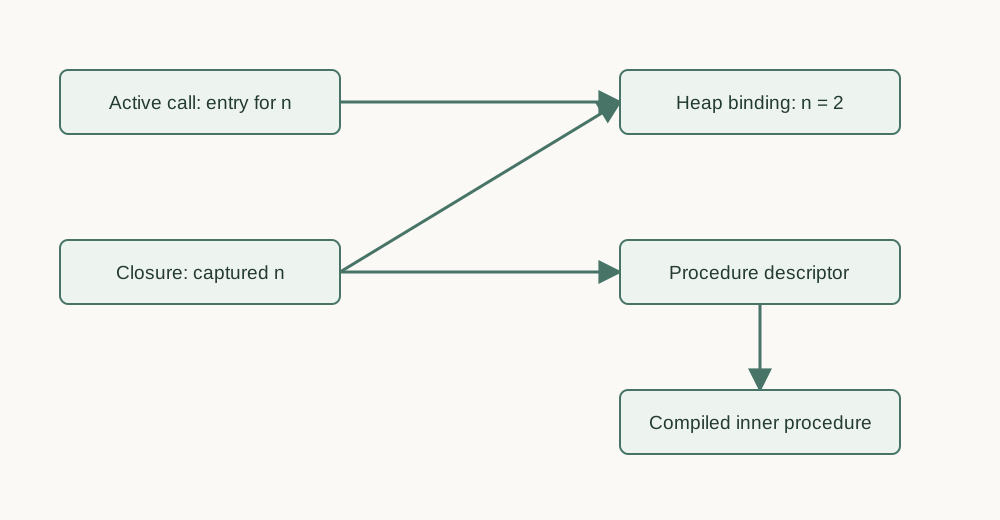
Before the outer call returns, its map and the new closure refer to the same binding. Only the relevant entries are shown. This illustration is public domain.
When make-adder returns, its stack space is released. The returned closure remains accessible through add-two and still points to the binding record for n, so that record remains allocated.
Calling the returned procedure
Calling add-two with 40 creates a new binding record for x containing that value. The call's stack map points to this new binding and to the captured binding for n. The procedure body uses these two bindings to add 2 and 40.
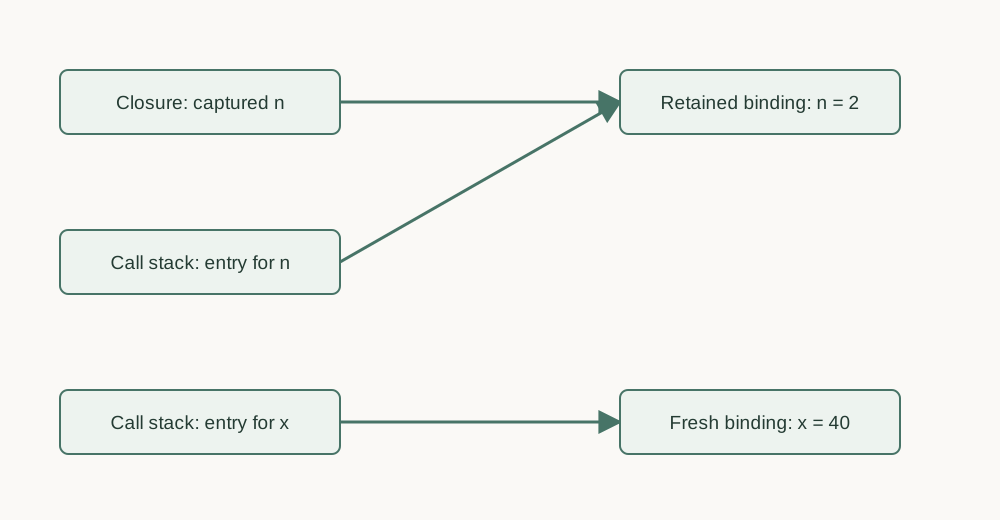
The invocation combines a captured binding with its own argument binding. This illustration is public domain.
When the call returns 42, its binding for x can become unreachable. The captured binding for n remains available for the next call to add-two.
We can also create another adder:
(define add-ten (make-adder 10))
(add-ten 40) ; 50
(add-two 40) ; 42
Both closures use the same compiled inner procedure but refer to different bindings for n. We do not need another copy of the machine code for every adder.
Closures can also change captured variables. When two closures share a binding record, a change made by one is available to the other because both refer to the same stored value.
Keeping the bindings alive
The collector described in Taking out the garbage follows references from the running program's roots. It reaches binding records through active calls and closures. For each closure, the procedure descriptor identifies which binding pointers to follow.
As long as add-two remains reachable, its closure and the captured binding for n are not garbage collected. If the program loses its last reference to that closure, it becomes eligible for collection. The captured binding can also be reclaimed if no other live call or closure still refers to it.
On a Z80 all of this has a cost. Setting up a procedure call requires stack space and the allocation of binding records. Creating a closure allocates more heap storage and can extend the lifetime of its captured bindings. The garbage collector then spends processor time tracing references and recovering storage for reuse. All of this machinery has to fit alongside the program and its data within a 64 KiB address space!
Collecting more often can recover unused storage sooner but takes time away from running the program. Waiting longer between collections leaves less free memory in the meantime. Neither approach can recover bindings that are still reachable, so a program that keeps retaining closures can eventually exhaust the heap.
My tests so far have been encouraging and Skate has performed well enough with the programs I've tried. Even so, this is a substantial amount of support machinery to implement on a small machine. The challenge is to keep procedure calls, closure creation and garbage collection efficient enough that useful programs have room to run at a reasonable speed. For me, closures are part of what makes Scheme worth implementing so their cost is something that I need to manage carefully as I develop Skate.